Showing posts with label Recycling/Conservation. Show all posts

9.12.08

Demand for Recycled Waste Down

Just yesterday I published a post about the importance of buying recycled products like recycled paper, plastics, etc. I pointed out that the more recycled products you purchase the greater the demand for recyclable waste.


Serendipitously, the New York Times published an article today that noted a significant dip in demand for recycable waste. That reduction in demand means lower prices paid for the waste and a lot of unpurchased waste being sent to the landfill.

From the article..."The economic downturn has decimated the market for recycled materials like cardboard, plastic, newspaper and metals. Across the country, this junk is accumulating by the ton in the yards and warehouses of recycling contractors, which are unable to find buyers or are unwilling to sell at rock-bottom prices."

The piece is definitely worth a read, click HERE to read it.

8.12.08

Just a Thought on Recycling

Last week we attended a recycling event in Washington, DC. The presenter at the event put forth an obivous, yet overlooked idea on recycled products.


You see, your community sells the recycled material you put in the bin to suppliers who then make the material into new products.

The more you buy products made of recycled material, the more demand there is for your bottles, cans, paper, etc. The more demand, the higher the price your community can charge for the stuff in your recycling bin.

Next time you are buying toilet paper, paper towels, printer paper, plastics, etc. try to buy recycled. You are reducing demand on our natural resources and increasing demand for your own recycled materials.

24.9.08

Tree Huggers Save Redwoods

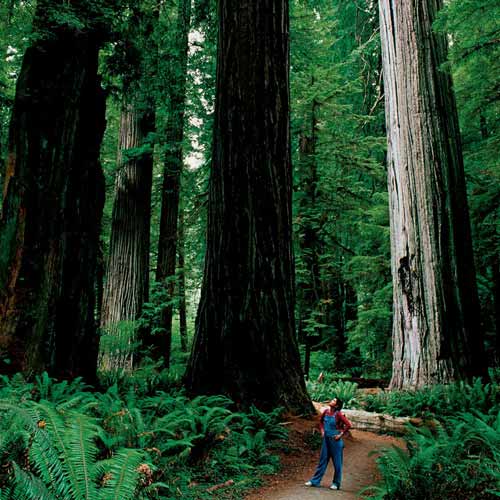
"Treehuggers" might not be the right label for Nadia Berg and Billy Stoetzer. The two sat in redwood trees in Humbold County, California's Nanning Creek grove for 11 months to protect the majestic icons from a timber company planning to cut the trees down. 


The two environmentalists sat 200 feet off the ground in the limbs of the redwoods. Their efforts were part of a 20 year protest aimed at protecting the redwood forest. The trees are at least 1,500 years old and are part of California's identity. 

Over the course of the 11 month "sit-in" there were moments of violence and tension, but despite the bitter dispute over the fate of the redwoods, the resolution was peaceful. Humboldt Redwood Co., formerly known as Pacific Lumber Co., sent its president and chief forester on a hike into the redwood forest to meet the tree-sitters. He says he looked around at the forest and told the protesters that it would be the policy of his company not to cut the redwoods down. 

As the tree-sitters take apart their platforms and return to their lives, they are cautiously optimistic about the timber company's promise not to destroy the redwoods they fought to protect. 

14.8.08

Ocean's Dead Zones Doubling

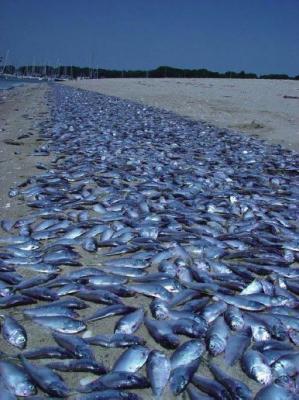
Have you ever heard of hypoxia, or the "dead zones" in our planet's oceans? They are areas of the ocean so starved for oxygen that nothing can live there. They are directly correlated to negative human impacts on the earth and have wiped out vast areas of oceanic habitat that once hosted diverse populations of sea life.

Dead zones are created when nutrients from fertilizers and waste end up in the ocean when rain washes them into rivers and streams that lead to the sea. These nutrients offset the natural balance in the ocean, creating the perfect environment for algae to bloom in huge numbers. Eventually this algae dies and sinks to the sea floor where it decays and destroys all of the oxygen, suffocating the plants and animals living in the area and creating an uninhabitable wasteland.

Robert Diaz, a professor at the Virginia Institute of Marine Science, recently led a study to count the number of dead zones on earth and his findings were very troubling. The number of dead zones has doubled every year since 1960. Diaz and his staff counted more than 400 currently existing dead zones around the world. These zones range from the massive ones in the Gulf of Mexico and Baltic Sea to smaller ones that appear in rivers and estuaries.

In the Chesapeake Bay alone, the amount of uninhabitable space caused by these dead zone conditions would have enough sea life to feed half of the commercial crab harvest for a year.

In an interview with the Washington Post, Robert Diaz said, "We're saying that hypoxia is now everywhere, it seems," said Diaz. "We can say that human activities really screwed up oxygen conditions in our coastal areas."

It is possible to recover these dead zones. Currently 4% of the total dead zones have shown some signs of recovery. Specifically, Florida's Indian River and New York's Hudson River have seen great improvement. Recovery requires significant changes in the use of fertilizers, the management of water run-off and improved water management.

As a consumer, oceanic dead zones are a great argument in favor of purchasing organic groceries that are not dependent on fertilizers and pesticides that contribute to these problems. As a voter, this is an issue your representatives should be made aware of.

To read the full Washington Post article on dead zones, click HERE.

13.8.08

Florida School Saves Cash & Jobs With 4 Day Week

Several companies have begun shifting to four day work weeks to save money on energy costs. This might help the business community, but could it work in education?

Schools teaching kindergarten through high school students have spent some time researching the possibility of switching to four day school weeks but have not come up with a solution for childcare during the fifth day while parents are still at work.

Fortunately, working around parental schedules is less of a problem for community college students. Florida's Brevard Community College in Daytona Beach made the leap from five day school weeks to four last year. The result has been a savings of $267,000 that has been re-invested for 10 new teaching positions. In addition, absenteeism is down 44% and there has been a 50% increase in employment applications.

The great part is that Brevard Community College and its student benefit from cost savings and more time off while we all benefit from energy efficiency and less traffic.

6.8.08

A Must Read: Greenpeace Urges End to E-Waste Export

From Cnet.com:

"This week, the international environmental group Greenpeace issued a report detailing the massive flow of electronic waste, or e-waste, to the west African country of Ghana. There, much like in China and India, unprotected workers including children are exposed to hazardous chemicals like mercury and lead while burning electronics in the search for copper and aluminum to resell."

To read the full article, click HERE.

28.7.08

Dump Old Electronics and Make Money

What is it with old electronics? For some reason they are so difficult to let go of. Its like we are all waiting for them to gain some new use they never had before so we can extend their lives. In most cases, this will never happen. Instead of holding onto all of those unused cell phones and music players, wouldn't it be better to make a few bucks off of them?

Two websites are offering money to anyone willing to sell their old electronic gear.

The first website is called Gazelle. Gazelle allows you to search for your electronic equipment, tell them what condition it is in and sell it for the price they offer. After you agree to sell the item, Gazelle will send a shipping package. Once they receive the package, they wipe off any personal data and either send you a check or deposit money into your PayPal account.

You are already familiar with the second website offering this service. Amazon.com offers a similar service to Gazelle. Simply go to THIS site and input the description and registration number of your equipment (they are only interested in cell phones and music players). Amazon will send you a confirmation and shipping package in the mail. Once they receive your item, they will give you a store credit to spend on the site.

One of the best benefits of using these services is that you are recycling your gear, rather than throwing it in the garbage, where the toxic chemicals and metals inside of it will leak into the ground or the air. If you have stuff thats too old to sell, consider electronic recycling programs like this ONE, this ONE or this ONE.

7.7.08

Drip Irrigation vs. Sprinklers

Its no secret that several states out west are struggling with a terrible dry spell. As California firefighters struggle to put out forest fires, its important for all of us to rethink the way we use water around our homes.

One important change you could make is the method you use to keep your yard and plants watered. Most people use sprinklers for watering. There is a better alternative to sprinklers that offers several great benefits, including water conservation.

Drip irrigation is a network of pipes that carry low pressure water to plants. Holes are placed along the pipes to allow for a slow drip onto the soil. Where traditional sprinklers are only 50-70% effective in watering a yard or garden, drip irrigation is 90% effective. There are other great benefits associated with switching to drip.

  • Drip irrigation may be exempt from water restriction laws during droughts.
  • Water is distributed directly to the soil and plants, reducing evaporation, runoff and loss due to wind.
  • The ugly mold marks on the sides of homes and fences from sprinkler splash are not a problem with drip irrigation.
  • Timers and automatic systems can be attached to drip irrigation pipes just like sprinklers.
  • The layout of a drip irrigation system can be easily changed or added on to.
If you are interested in installing a drip irrigation system at your home, there is a lot of great information available HERE.

24.6.08

Video: What Happens to Recycled Computers?

2.6.08

Best Buy Expanding E-Recycling Program

Usually you go to Best Buy to pick-up some new piece of electronic equipment to replace either an outdated piece or a broken one. Inevitably, this means something is going in the garbage. But it doesn't have to be this way.


Remember, electronics waste is just about the most toxic type of waste around. Embedded in those chips and bits are high quantities of dangerous metals and chemicals. Dumping televisions, computers, cell phones, batteries, etc. into the garbage results in drinking water pollution and the possible release of very dangerous compounds into the air. 

When its time to retire an old or broken piece of electronics equipment, make sure you are responsible. You can already recycle small items like cellphones, batteries, ink cartridges, etc. at Best Buy stores. Now, if you live near a Best Buy in Baltimore, San Francisco and several other cities (117 stores in all) you can also recycle large electronic equipment for free too.

The stores will accept 2 items per day, per household. They cannot take microwaves, air conditioners, or appliances. To recycle those items, contact your local garbage company. 

To get more information about the expanded Best Buy recycling program, click HERE.

28.5.08

Idle or Restart the Car - Which Saves More Gas?

I don't own a car anymore, but there was a time when I would sit in the drive-thru at a fast food restaurant or wait in line at the toll booth and see fumes rising up from all the cars as they patiently idled. 


Watching all those wavy lines rise into the atmosphere, I wondered whether it was better to turn the car off or to let it run. I figured it is possible that restarting the car over and over would actually burn more fuel than just letting it idle for a minute while I waited. 

Today I found the answer to this puzzle on Slate.com's "Green Lantern" column. A reader wrote in, asking the Green Lantern to settle a marital dispute over the possible fuel savings of turning a car off rather than leaving it to idle. 

According to the Green Lantern, the idea that your car uses more fuel restarting than idling is outdated. A long time ago, cars used carburetors to flush fuel into the engine to start the car. However, all modern cars use electric fuel injectors which carefully measure the amount of fuel necessary to start the car. 

To prove the point, a study conducted by the American Society of Mechanical Engineers in Florida showed that unless you are idling your car for six seconds or less, turning the engine off will use less fuel. This study used as its test subject a six-cylinder car with the air-conditioning on. 

Another idle myth that can be smashed is the idea that your car needs to "warm up" in cold weather when it is first turned on. This isn't the case. The best thing for your car is to begin driving immediately after the engine is turned on. The Ontario Department of Transportation performed an experiment where they found that a car driven for 12 minutes in 14 degree (fahrenheit) conditions will warm up to the same level as a car idling for 30 minutes.

The Green Lantern estimates that if all Americans turned their engines off, rather than idling, for 10 minutes per day, the combined savings in carbon dioxide emissions would be miniscule. However, if all cars were updated with the same technology the Toyota Prius currently includes, we could reduce national fuel consumption by 10%. The technology in the Prius turns the engine off instantly any time the car comes to a halt. Pushing the accelerator turns the engine back on. This means that in traffic, at traffic lights, at the toll booth, etc., your car would be conserving gasoline. 

To read the full Green Lantern explanation on Slate.com, go HERE. 

New Solar Powered iPhone?

The iPhone is by far the most overhyped consumer product in a very long time. Its hard to believe it was just one year ago that Apple's CEO, Steve Jobs, went on stage and introduced the little miracle to the world. Remember the long lines of people sleeping outside to get their hands on a $400 cell phone? Well get ready because it looks like iPhone 2.0 is on the horizon.

Monday, June 9th at 10 AM (PST), Jobs will take the stage in San Francisco to address the loyal Apple developers and unveil the company's newest creations. Among the array of shiny gadgets expected to show up on the Moscone West stage in San Francisco is an updated iPhone with a faster internet connection, GPS, video conferencing and the ability to charge its own battery using solar power.

Rumors about the new iPhone's solar power capability started spreading when a patent application from Apple was uncovered that showed detailed drawings and descriptions of a mobile device with a layer of solar panels underlaid beneath an iPhone-like screen. You can view the patent HERE.

Apple would not be the first company to experiment with the idea of using solar panels to charge the batteries of gadgets. There are many consumer products that integrate this idea. There is the solar powered backpack that has solar panels on the back and power adapters inside so you can utilize the sun's rays to charge your gadgets while you're walking around outside. There is also the iSun, solar powered cell phone charger that connects to your cell phone and charges its battery using solar power. 


The problem with a lot of these solar powered chargers is that they are expensive and not very convenient to carry around. If Apple could effectively integrate the solar panels directly into the iPhone's screen, they could skip the middleman and allow users to charge their phones quickly by setting it on a window sill. 

Of course, solar powered phones will still have to rely on wall outlets for most of their battery charges. But if Apple combined its gifts in simplicity and design to create an iPhone that could partially rely on both solar and traditional electricity, it would be a promising sign of things to come. 

23.5.08

Video: Removing and Disposing of Old Carpet

Carpet may contribute to lower air quality for your home. There are a lot of great alternatives to carpeting that are healthier for your family and the environment. When you're ready to replace that tired carpet, remember to recycle the old and be innovative with the new.


Below is a video about recycling carpet and how to utilize the materials under your carpeting.


Brighter Planet's 350 Challenge


If you are a blogger and would like to participate in a project aimed at reducing greenhouse gas emissions, check out Brighter Planet's 350 Challenge. Green Piece Blog has signed up to participate and we encourage our blog neighbors to do the same. 

Brighter Planet's 350 Challenge

22.5.08

Greener One: How Green are Your Goods?

Getting information about the eco-friendliness of different products is pretty tough. Often, you cannot rely on the information from the manufacturer because it is skewed, exaggerated or misrepresented to increase sales. Google searching is tough because there is so much information out there, spread out over so many websites.

So what is a curious consumer to do? A new website called Greener One has just opened up shop on the internet to help us all out. It is similar to Wikipedia in that it invites educated citizens to contribute information on the ingredients, toxicity and lifespan of different products ranging from electronics to cleaning agents.
The long-term goal of the site is to become a go-to resource similar to "Consumer Reports" where consumers will look for reviews and information on a product prior to making a purchase. They can find out if the product is recyclable and whether it contains harmful ingredients.

If you want to check the site out, click HERE. It is in the beginning phases of development, but already there are several categories of product reviews available.

20.5.08

Keeping Your Soil Moist

As the outside temperatures increase and we see more sunny days, its going to be harder and harder to keep the soil in your garden, and in your planters, moist.

Its vital that the soil stays damp because the bacteria and microbial communities living in the dirt are helping your plants grow. If the soil becomes too dry, these communities die off and the soil must be replaced.

Of course, we all know that water is becoming an increasingly limited resource on our planet. Its necessary for everyone to cut back on the water they use for unnecessary purposes, like watering the garden. So how do you maintain your plants while maintaining the environment?

We have to address this question in two parts, based on the conditions under which your plants are planted.

1) Plants in Pots

  • Planting your garden in a series of pots is actually a very convenient and effective way to garden. You can choose attractive planters that can be arranged strategically around your yard or in your home. They can be moved in cases of dangerous weather and they will be less affected by common yard annoyances like moles and insects.

  • There are now many options available for keeping the soil in pots moist, from special crystals to Miracle Grow Moisture Control Soil. You can avoid all of these unusual and possibly toxic solutions by utilizing a few cut-up sponges.

  • Take your empty planter and strategically place cut, moistened sponges in the base of the pot to cover the bottom.

  • Once you've filled the pot with soil and a few plants, you should notice the soil retains its moisture longer. If when watering you notice slight flooding at the top of the soil, the sponges are full of water and it is unneccesary to continue watering for some time.

2) Plants in the Ground

  • The first rule in having a ground-planted garden is using plants that are native to your location. These plants will be acclimated to your soil type so they should not require too much additional water.

  • The second rule is to make sure you have lots of treens planted around the yard that will provide not only shade during long, hot afternoons, but also a prolonged dripping of water after a rain fall.

  • Water the plants in the early morning or later in the evening to avoid unnecessary evaporation.

  • If planting on a hill, use barriers to keep water from running off the surface of the soil.

  • Use mulch and other ground cover like pine needles to absorb water and keep moisture in.

  • Install drip sprinklers rather than using spray sprinklers.

15.5.08

Changing Your Thermostat Video

Installing a new thermostat that can be programmed to turn the A/C or heat off when you leave for work and back on when you come home could save you some serious dough.

I found this Sierra Club video on Youtube where a slightly irratating guide takes you through the process of installing your own thermostat. Its worth a look.

8.5.08

Google Maps Hates Plastic Bags Too

Plastic bags are mischievous little creatures. They are manufactured using petroleum. They are more expensive to recycle than to create. They clog drainage systems, choke sea life and cause unsightly tangled plastic webs in tree limbs.

Add a new annoyance to the list of problems caused by plastic bags; Google Maps interference.

Googlesightseeing.com has found a Google Maps Street View section of Fairbanks, Alaska where a plastic bag blew up off the street and covered the lens of the camera mounted on top of the Google Maps car that is used to photograph street views for the website.

There apparently is some debate over whether the bag actually landed on the camera's lens accidentally or if it was placed there to sabotage the camera's ability to capture that portion of the city. Regardless, the bag remained on the lens for several blocks.

If you want to check out the little jerk causing havoc with Google Maps, go type in "College Road and Old Steese Highway, Fairbanks, Alaska." Click on the street view and there it is!

If you want to avoid contributing to our nation's plastic bag problems, bring your own cloth bags to the store. Keep a few in the car, at the office and on you. We will end the plastic bag mischief once and for all!

18.4.08

Water Usage Calculator

Google "Carbon Calculator" and you'll discover a ton of great websites that allow you to calculate your carbon footprint. Calculating your water usage, however, is a little more difficult.

Zerofootprint has created a great "One Minute Calculator" that calculates your home water usage by answering a few quick questions.

The calculator can be found HERE.

I answered the questions and came out with 95,827 liters/person/year of water usage. I think its unusually low compared to the average American because I don't have a car to wash or a yard to water. According to the site, Canadians score an average of 125,000 liters/person/year, while Europeans score 73,000.

I played around with the questions and found that by reducing my showers down to 5 minutes a piece and by installing a "low flow" device into my toilet, I can save 44,165 liters/person/year. Thats lower than the Europeans, magnifique!

It doesn't take a genius to know that water is becoming an increasingly limited resource. If you want to conserve the amount of water you're using, go to THIS post where I outline some easy tips to do just that.

Energy Saving HDTVs

The most popular posts on the Green Piece Blog are the ones addressing HDTV's and energy usage.

HDTV's are tremendously popular as people make the switch from traditional tube televisions to the flat, high-definition versions. Unfortunately, as electronics companies improved the visual performance of their TV's, they did not improve their environmental impact. In fact, an LCD or Plasma TV burns through 4 times as much energy as a traditional tube TV.

The technology companies are currently playing catch-up by introducing more energy efficient flat-panel HDTV's. The first company to build a more energy efficient HDTV is Philips. Their Eco TV provides owners with options like dimming the back light or capping peak light output to reduce energy consumption by as much as 30 watts compared to traditional Philips HDTV's.

CNET has also ranked HDTV's based on several categories of energy usage, such as watts per square inch and watts overall. Here are the best of each category...

  • Watts per square inch of screen overall: Samsung HL-T5687S (0.12)
  • Watts per sq. inch LCD: Philips 42PFL7432D (0.22)
  • Watts per sq. inch plasma: Insignia NS-PDP42 (0.29)
  • Watts per sq. inch after calibration: Samsung LN-T4665F (0.09)
  • Watts overall, regardless of screen size: Sharp LC-32D44U (126.25)
  • Watts overall, 40- to 50-inch screen size: Philips 42PFL7432D (134.04)
  • Watts overall, larger than 50-inch screen size, flat panel: Olevia 252T FHD (257.29)
In addition to buying a more energy efficient HDTV, there are other ways to reduce the environmental impact of your new toy.

First, make sure that your HDTV is plugged into a power strip or wall outlet that you can turn off whenever you are not using the television. HDTV's uselessly burn energy while in "standby" mode.

Second, make sure you recycle your unused tube television. Don't just toss that antique in the garbage. Inside the tube TV is a lot of toxic metals and substances that can get into the water supply or spread in other ways to negatively impact people and animals. To find a nearby television recycling center, go HERE.